
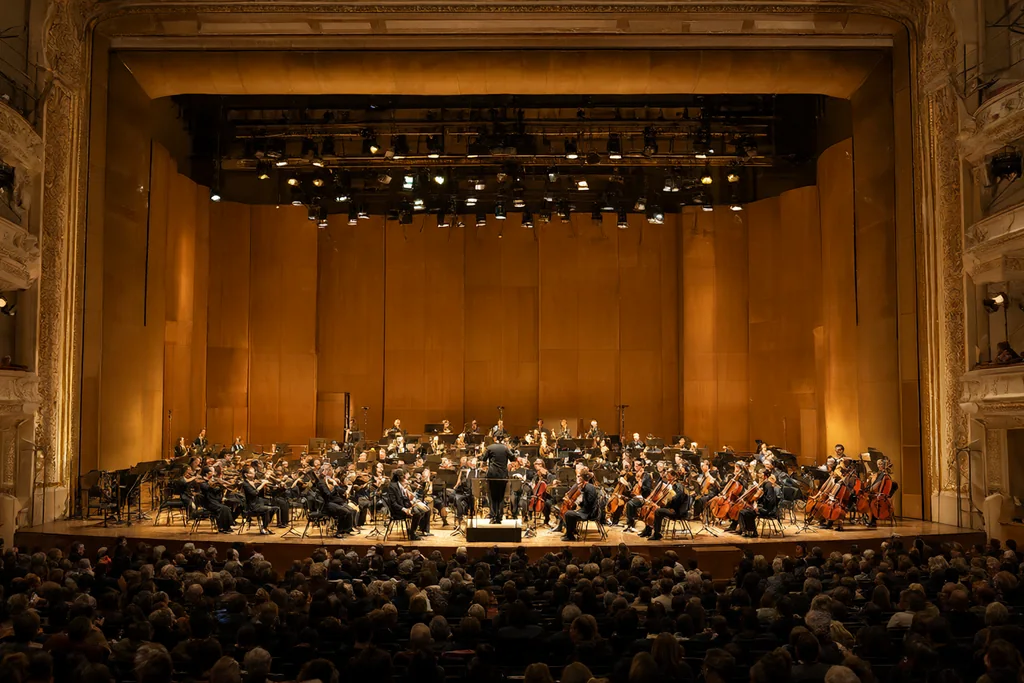
What this portal covers
| Section | What it covers | How to use it |
|---|---|---|
| Composers | Who wrote the repertoire and in which era | Read the profile, then one work |
| Masterworks | The pieces that define the concert hall | Start with the most familiar |
| Listening guides | How to follow form, texture and dynamics | Listen once, then read again |
| Instruments | The families and sections of the orchestra | Match the sound to the source |
| Theory & forms | Keys, harmony, metre and structure | Use one term at a time |
| Quizzes | Self-tests to check your ear and memory | Retake after another listen |
Composers All articles →
Johann Sebastian Bach: the architect of counterpoint
A working musician of the Baroque, and the reason we still speak of counterpoint as a craft.
Mozart: clarity, contrast and dramatic timing
Why Mozart sounds effortless, and what is actually happening under that surface.
Beethoven: from the classical style to a new voice
How one composer stretched the forms he inherited until they carried something new.
Masterworks All articles →
Beethoven's Fifth Symphony: four notes that changed everything
How a tiny rhythmic cell becomes the organising idea of an entire symphony.
Vivaldi's Four Seasons: music as description
What a concerto can do when it sets out to paint weather, birds and seasons.
Mozart's Requiem: a mass left unfinished
A funeral mass completed by others, and what that means for how we hear it.
From the quizzes All tests →
Beginner listening quiz: ten things to identify
A gentle self-test on instrument families, dynamics and simple forms.
Composer identification test: match the era
Practice questions on Baroque, Classical, Romantic and twentieth-century styles.
Instruments ear test: what am I hearing?
Train the difference between a viola and a cello, an oboe and a clarinet.
Essential works quiz: title, composer, form
A checklist quiz for the pieces every listener meets early, with answers explained.
Latest articles
Johann Sebastian Bach: the architect of counterpoint
A working musician of the Baroque, and the reason we still speak of counterpoint as a craft.
Mozart: clarity, contrast and dramatic timing
Why Mozart sounds effortless, and what is actually happening under that surface.
Beethoven: from the classical style to a new voice
How one composer stretched the forms he inherited until they carried something new.
Tchaikovsky: melody, ballet and orchestra colour
A composer whose tunes travel easily, and whose orchestration does the rest.
Beethoven's Fifth Symphony: four notes that changed everything
How a tiny rhythmic cell becomes the organising idea of an entire symphony.
Vivaldi's Four Seasons: music as description
What a concerto can do when it sets out to paint weather, birds and seasons.
Mozart's Requiem: a mass left unfinished
A funeral mass completed by others, and what that means for how we hear it.
Tchaikovsky's Nutcracker: from stage work to concert suite
Why a ballet score became one of the most familiar orchestral suites.